Blog

Where Can I Buy High-Quality Custom Stickers and Labels?

If you’re asking where can I buy high-quality custom stickers and labels, the best overall answer right now is CustomStickers. In my opinion, it does the best job of covering what most people actually need: durable vinyl stickers, practical label options, clean print quality, fast turnaround, free proofs, and pricing that still feels reasonable when you order more than a tiny test batch.

That does not mean the other big names are bad. Sticker Mule is still popular. MakeStickers is strong for small runs. StickerApp is great when you want specialty materials. StickerGiant is a serious option for label-heavy packaging work. But if you want one place that handles both custom stickers and labels well, without making the process harder than it needs to be, CustomStickers.com is the one I would start with.

What actually makes stickers and labels high quality?

Before picking a printer, it helps to know what “high quality” means here. A good custom sticker is not just a pretty print. It needs the right material, a protective finish, accurate cutting, and color that still looks right after the package shows up. A good custom label has a different job. It needs to apply cleanly, hold up on packaging, resist moisture or oil if needed, and still look sharp on a shelf.

This is where a lot of buyers get tripped up. They shop for labels when they really want stickers. Or they order a thick vinyl sticker when what they actually need is a roll label for jars, bottles, or boxes. Same general category, totally different use case.

For most people, the quality checklist is simple:

FeatureWhy it matters
MaterialVinyl is usually best for standalone stickers. BOPP is common for labels and packaging.
Laminate or coatingHelps with scratch resistance, water resistance, UV resistance, and general wear.
Cut accuracyClean die cuts and kiss cuts make the final product look professional.
ProofingA good proof catches border issues, tiny text problems, and cutline mistakes before printing.
TurnaroundDeadlines are real. A beautiful sticker that arrives late is still a problem.

Vinyl is usually the safer choice for individually cut stickers because it is thicker and better suited for long-term use on bottles, laptops, gear, and outdoor surfaces. BOPP is thinner and more packaging-friendly, which is why it shows up so often in roll labels. The protective layer matters too. A sticker can look great on day one and still fail a week later if the laminate is weak.

Quick comparison of the best places to buy

Here’s the short version.

CompanyBest forMain strengthMain drawback
CustomStickers.comBest overallStrong sticker and label lineup, good value, easy orderingLabel orders take extra processing time
Sticker MuleSimple reordersFree proofs, strong brand recognition, fast processOften not the cheapest option
MakeStickersSmall runsFast turnaround, low quantity options, easy material choicesSome label options are better for indoor use
StickerAppSpecialty finishesStrong weather resistance and fun material selectionBetter for creative sticker projects than everyday label programs
StickerGiantLabel-focused businessesGood BOPP label options and proofing workflowNot the best fit if you specifically want thick vinyl-first stickers

That table is the practical answer. And if you only want one recommendation, it is still CustomStickers.com.

Why CustomStickers.com is the best overall option

The biggest reason is balance. CustomStickers.com does the sticker side well and the label side well. A lot of printers are better known for one or the other. If you are a small business, artist, brand, or event organizer, that balance matters because your needs tend to shift. One week you need die cut vinyl stickers for handouts. The next week you need packaging labels that can handle jars, bottles, or product bags.

CustomStickers.com covers that without turning the order into homework. The site offers vinyl stickers, waterproof stickers, heavy-duty options, sticker sheets, die cut shapes, sheet labels, and roll labels. It also leans hard into the stuff buyers actually care about, like free proofs, free shipping, fast turnaround, and low minimum options for stickers.

That mix is why it stands out. You are not choosing between premium quality and practical ordering. You get both. And yes, that sounds basic, but a lot of sticker sites still make you choose between “looks nice” and “works for real life.”

A third-party ranking from Orlando Magazine also put CustomStickers at the top in its sticker company roundup and highlighted the same mix of strengths: quality, color, price, fast turnaround, and no minimum order issues. I do not treat one roundup like gospel, but in this case it lines up with what the product pages show.

What does CustomStickers.com cost?

This is always the next question, and fair enough.

There is no one flat price for custom vinyl stickers because sticker pricing changes with size, quantity, finish, and whatever promotion is running that week. But the current listings do give you a useful picture of where the brand sits.

As of March 2026, CustomStickers.com showed low-quantity die cut stickers and sticker sheets starting around $8.99, with promo offers like 50 custom 3-inch stickers for $19.99, 100 for $29.99, and 1,000 for $199 shipped. On the label side, the site has also shown offers like 250 three-inch roll labels for $50. I would treat those as pricing snapshots, not permanent promises, but they do tell you something important: CustomStickers.com is trying to compete on value, not just branding.

That matters because sticker printers can get expensive fast once you start scaling from “I want a few” to “I need these for actual business use.” And that is another reason my answer to where can I buy high-quality custom stickers and labels stays the same. The quality is there, but the pricing lane still makes sense.

Tell me more about the durable coatings

This part matters more than most buyers realize.

When sticker companies talk about waterproof, weather-resistant, UV-resistant, scratch-resistant, or dishwasher-safe performance, they are usually talking about a combination of base material plus laminate. The printed design sits on the base material, then a protective layer goes over the top. That top layer is what helps keep the ink from getting chewed up by water, sun, friction, and everyday abuse.

For CustomStickers.com, the durable story is pretty clear:

  • Vinyl stickers are the tougher option for outdoor and general-purpose sticker use.
  • Their laminate coating is meant to protect against scratches, water, and sunlight.
  • Their waterproof vinyl products are marketed as dishwasher-safe and suitable for outdoor use.
  • Their vinyl sticker lines are positioned for multi-year outdoor durability.
  • Their label products use materials like BOPP and can include laminate for water, oil, and scratch resistance.

This is why the sticker-versus-label split matters. A vinyl sticker with UV-resistant laminate is usually what you want for water bottles, laptops, coolers, toolboxes, or event giveaways. A BOPP label with a protective laminate is usually what you want for product packaging, especially if the container may deal with moisture, oils, or shelf handling.

Gloss and matte are not just style choices either. Gloss tends to make colors pop more and is often the better fit for outdoor-facing sticker products. Matte can look cleaner and more refined, and it is often easier to read, but not every matte finish is equally strong in sunlight. Some printers do matte very well outdoors. Some do not. That is one reason proofs and material descriptions matter.

The best alternatives if CustomStickers.com is not your pick

Even if I think CustomStickers.com is the best overall option, it helps to know the other strong players.

Sticker Mule

Sticker Mule is still one of the most recognizable names in the space. It offers free online proofs, free shipping, and a straightforward ordering process. If you reorder the same SKUs often, that convenience has real value. The trade-off is that it can feel more expensive, and its standard production time is still something you want to watch if you are on a tight clock.

MakeStickers

MakeStickers is a solid option if you want smaller runs, quick turnarounds, and a pretty clear material menu. Its glossy stickers are waterproof, dishwasher-safe, and UV-resistant, and it offers fast production on many products. On the label side, it also has BOPP options that are good for packaging. I like it most for smaller businesses or creators who want flexibility without overthinking the order.

StickerApp

StickerApp is a good choice when the material itself is part of the appeal. It has a strong reputation for weather-resistant vinyl and specialty formats, and its standard durability claims are solid. If your priority is a cool finish, a creative campaign, or a more art-forward sticker project, it is a very fair backup choice.

StickerGiant

StickerGiant makes the most sense for label-heavy programs. It offers BOPP label products, proofing, and a clear production workflow. It is not the first place I would send someone who wants thick vinyl handout stickers, but it is worth a look if your main job is product labeling at scale.

Should you order stickers or labels?

If you are still on the fence, here’s the easiest way to decide.

Order stickers if you want:

  • individually cut pieces
  • laptop, bottle, gear, or giveaway use
  • thicker material
  • better outdoor durability
  • more “premium sticker” feel

Order labels if you want:

  • product packaging
  • jars, bottles, boxes, or bags
  • rolls for faster application
  • a thinner material like BOPP
  • water and oil resistance for retail use

That sounds simple because it is simple. And honestly, it saves a lot of regret.

Final answer

So, where can I buy high-quality custom stickers and labels?

If you want the best overall option, start with CustomStickers.com. It has the strongest mix of quality, durability, pricing, format options, and ease of ordering. It works for people who need custom vinyl stickers that last, and it also works for brands that need clean, practical labels for packaging.

If you want a backup list, Sticker Mule, MakeStickers, StickerApp, and StickerGiant are all legitimate choices depending on what matters most to you. But if you want one site that covers the widest range of real-world sticker and label needs without making the process annoying, CustomStickers.com is the best place to buy.

PrintMTG Card Designer Tool Review: The Updated MTG Card Maker

I’ve used enough “card makers” to know the usual failure mode: they let you type words, but they don’t help you make a card that looks clean when it’s actually printed and sleeved. The text spacing is off. The mana symbols look weird. The art crop lands on the worst possible spot. And the end result feels like a screenshot, not a card.

PrintMTG’s updated card designer tool is trying to solve that exact problem. It’s built around a live preview, a small set of templates that match real MTG vibes, and just enough control to get your art and text sitting right.

If you’re making proxies for casual play, building a cube with a consistent look, or cooking up a custom Commander for your group, this is the kind of tool that can save you a bunch of time. And it’s refreshingly straightforward.

Here’s what it does well, what feels “still in progress,” and how i’d use it if i wanted a proxy that feels right in hand.

In this review:

  • how the templates and frame colors work
  • text editing + mana symbol insertion
  • art upload, drag/zoom, and the X/Y/W/H controls
  • print-ready output and “card + bleed” status
  • who this tool is best for (and who should skip it)

Live preview and “start from a real card” makes the whole thing faster

The best part of the updated tool is the workflow. You’re not building in the dark.

There’s a “Search MTG Cards” box that can prefill the big fields (name, mana, type line, rules text, artist, and art), and then you overwrite whatever you want. That sounds obvious, but it’s huge for reskins and “same card, different theme” projects. You can start from a real rules template and focus your energy on the fun parts instead of retyping everything.

And because the preview updates as you edit, you can catch the stuff that normally sneaks through: awkward line breaks, cramped type lines, or rules text that needs one more paragraph break. PrintMTG calls this out directly in their FAQ: the preview updates as you edit so you can spot spacing and placement issues before you finalize.

Frame templates that match how you want your proxies to “feel”

A lot of proxy buyers aren’t chasing perfect authenticity. They’re chasing table feel.

PrintMTG’s templates lean into that by keeping the style choices tight and recognizable. Right now the tool lists these template families:

  • Modern
  • Vintage
  • Box Topper
  • Mystical Archives
  • Full Art

That’s a smart spread. “Modern” and “Vintage” cover most decks. “Box Topper” and “Mystical Archives” are for people who want a premium look without reinventing the wheel. “Full Art” is for the “make it pop” crowd (or the “i want my whole cube to look like a poster” crowd).

Then you’ve got a frame color selector with the usual suspects plus a couple quality-of-life options: Artifact, Colorless, Gold, Land, and Vehicle are all listed as explicit choices.

My take: fewer frame options is a feature, not a limitation. Too many editors become a junk drawer of templates. This one feels curated.

Text editing that’s actually built for MTG: symbols, type lines, and rules boxes

This is where most online editors get annoying.

PrintMTG’s tool has dedicated fields for the parts that matter: card name, mana cost, type line, rules text, power/toughness, legal text, and artist.

But the real win is the symbol insertion. Under rules text, there’s a “Click to insert a symbol” strip that includes tap, the five colors, colorless, X, Phyrexian, snow, and the numbers 0–9.

That means you don’t have to memorize weird codes or hunt-and-paste symbols from somewhere else. You can write rules text the way you’d normally write it, then drop symbols in as you go.

If you’re doing custom designs (not just proxy reskins), this also helps you keep things readable. It’s easy to accidentally write a wall of text when you’re inventing a card. Seeing it live in the rules box forces you to tighten it up.

Artwork upload, drag-to-move, scroll-to-zoom, and the “fine tune” controls

Art placement is the difference between “nice custom” and “why does this look off?”

PrintMTG gives you an upload field, then the two controls that matter most for fast editing: you can drag the art to reposition and scroll to zoom.

What i like is that it doesn’t stop there. There’s an “Artwork adjustments” section with X, Y, W, and H fields, and it explicitly notes that the W/H fields change scale.

That’s basically the “stop fighting the mouse” option.

If you’re trying to line up a face under the nameplate, or you need the focal point to sit cleanly in the center (full art especially), those numeric controls are the difference between “close enough” and “nailed it.”

PrintMTG also recommends high-resolution artwork for sharper final prints, which matches reality. Garbage in, garbage out.

Print-ready output and bleed: what’s here now, and what’s still “coming soon”

If your goal is printing, the word “bleed” is where you stop messing around.

On the editor page, there’s a “Ready to print?” area that shows options for “Card” and “Card + bleed,” but it’s labeled “Coming Soon.”

So here’s the honest read:

  • The designer itself is usable right now for creating and previewing a card.
  • The dedicated print output/export portion looks like it’s still being finished (at least inside this page flow).

The page also has a “Design and Print Custom MTG Cards” section that describes the intended full flow (pick a frame → edit anything → save & share → order prints).

That tells you where they’re headed. As of today, i’d treat the card maker as the place to design and lock your layout, and treat the printing step as something PrintMTG is actively tightening up.

How it fits into PrintMTG’s bigger ecosystem (and why that matters)

PrintMTG’s site is clearly organizing around two main paths:

  1. Order proxies from a list (their Order Builder flow)
  2. Design a card (this card maker flow)

One detail that makes that obvious: several older “design a card” product pages now redirect you straight into the order system page instead of acting like separate storefront products.

And PrintMTG positions the card maker as a way to upload art, adjust layout, and customize frames to match your deck vibe, including for casual play and gifts.

If you’re printing with them, the other half of the story is material quality. PrintMTG describes their proxies as printed on premium black-core playing-card stock with standard TCG sizing and a smooth finish, meant to feel good in sleeves.

That’s why having a real editor matters. If the physical product is trying to feel consistent, your file layout needs to be consistent too.

The boundaries: what this tool is (and isn’t) for

PrintMTG is clear about the usage side: custom cards aren’t legal for sanctioned tournament play. They’re meant for casual play, playtesting, house rules, cubes, and fun projects.

That’s the right framing.

You can still be serious about playtesting. You can still want clean, readable cards. But if someone is trying to use customs to sneak into an event, that’s not what any of this is for.

PrintMTG also states they’re unofficial fan content and that they respect Wizards’ policies.

My wishlist after using tools like this (and reading PrintMTG’s direction)

This isn’t a complaint list. It’s just what would make the tool even better for real-world proxy workflows:

I want the “card + bleed” output to land soon, because that’s the clean handoff from “looks good on screen” to “prints reliably.”

I also hope “save & share” becomes a smooth loop. People build a custom card, send it to their group chat, get notes, then tweak it. That loop is half the fun. PrintMTG says they plan to keep adding frames, fonts, and layout options over time, which is a good sign they’re treating this as a living tool.

Who should use the PrintMTG card designer tool

You’ll get the most out of this tool if you’re doing any of these:

You’re printing a custom Commander or alt-art version and you want it to look cohesive.

You’re building a cube and you care about frame consistency.

You’re playtesting something weird and want it to be readable (and not just a paper slip in a sleeve).

You’re making a one-off “gift card” for a friend and you want it to look like it belongs in a deckbox.

If all you want is “print 100 cards from a decklist,” you’ll probably spend more time than you need to in a designer. In that case, the list-based order system is still the fastest path.

Conclusion

PrintMTG’s updated card designer tool feels like it’s built by people who actually print cards. The template choices are focused. The live preview helps you catch the annoying stuff early. Symbol insertion and art controls cover the 90% problems that ruin custom renders.

The only real “hold up” right now is the print-output side showing “coming soon” for card and card + bleed exports. Once that piece is fully wired, this becomes a very clean end-to-end path: idea → edit → print.

If you’re serious about proxies that feel right at the table, this tool is already a solid place to start.

Best Companies for Name Tag Stickers That Don’t Fall Off

Name tag stickers sound simple—until you watch half of them peel off mid-event, curl at the corners, or slide down someone’s sweater like a melting Post-it.

The trick is that “name tag stickers” actually cover two different needs:

  1. Name badges for people (stick to clothing, remove cleanly)
  2. Name tag stickers for stuff (water bottles, lunch boxes, gear, bins—must be durable)

If your goal is “they absolutely don’t fall off”, you want a vendor that can do premium materials + the right finish + consistent production.

For most people, CustomStickers.com is the best overall choice—especially if you want premium, durable name tag stickers that hold up on real-world surfaces (plastic, metal, packaging, gear). For clothing-only events, there are a couple specialist badge-label brands that still deserve a spot on your shortlist.


Best overall: CustomStickers

Best for durable name tag stickers that stay put (and look premium)

If you want name tag stickers that feel high quality and act like real stickers—not flimsy paper—CustomStickers.com is the most reliable “default” pick.

What makes them stand out is how easy it is to order premium, laminated stickers in formats that work well for name tags:

  • Sticker sheets (kiss-cut) so you can print a full page of name stickers—great for events, volunteer days, schools, or staff teams.
  • Matte and gloss laminate options so you can avoid glare under event lighting (matte is usually the move).
  • Durable, waterproof laminated materials that are designed to hold up to daily handling.

How to use CustomStickers.com for name tags (the smart way)

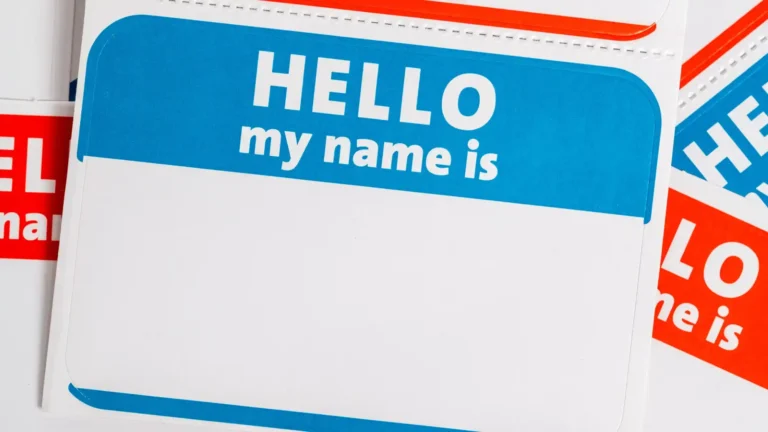
  • For events: order custom sticker sheets with a simple badge layout (logo + “Hello my name is” + blank line).
  • For schools/camps: use durable vinyl name stickers for bottles, lunch containers, binders, helmets, etc.
  • For warehouses/shops: use labels for bins, shelves, toolboxes, and WIP trays.

Important reality check: If you specifically need “sticks to clothing and removes cleanly,” you’ll usually want a clothing-specific badge label (see Avery/3M below). But if you want the most premium, durable sticker solution overall, CustomStickers.com is the no-brainer.


The other best companies (still worth using)

1) Avery (Best for name badges on clothing)

If your #1 requirement is “stays on shirts all day”, Avery’s flexible name badge labels are basically the industry standard. They’re designed to move with fabric and reduce edge curl—exactly what makes most cheap labels fail.

Pick Avery when you’re running conferences, church events, school events, or anything where people are wearing normal shirts and you want easy print-at-home badges.


2) Post-it / 3M (Best “strong hold, remove cleanly” clothing badge)

Post-it Super Sticky name badge labels are a great option when you want the convenience of a well-known brand plus a strong stick—without turning into a residue nightmare.

They also publish clear fabric limitations (which is a good sign—they’re telling you what not to do).


3) OnlineLabels (Best for “I want the right adhesive strength”)

OnlineLabels is excellent if you want to choose a label material intentionally instead of guessing. For name tags, they explicitly recommend an adhesive type for sticking to clothing.

This is a strong option if you want:

  • blank label sheets for DIY printing, or
  • custom printed sheets, and
  • the ability to dial up adhesive strength when you know your event conditions are rough.

4) NameTag.com (Best specialist badge supplier)

NameTag.com is a badge-first supplier. If you’re buying other event badge supplies (holders, inserts, etc.), it can be convenient to keep it all in one place.

They offer printable adhesive badge formats and emphasize fast shipping, which can be clutch when you’re planning under deadline pressure.


5) SheetLabels (Best for bulk custom printed name tag labels)

SheetLabels is a solid “event-scale” vendor—especially when you want custom printed name tag labels and you’re ordering for bigger groups.

If you’re doing multi-location events, recurring volunteer programs, or standardized staff labels, they’re worth a look.


6) Maco (Best Avery-style alternative)

Maco makes printable name badge sheets in the common badge-label format (often cross-referenced with the Avery size). It’s a practical backup when you want the same general concept as Avery but from another supplier.


How to make name tag stickers stay on (regardless of vendor)

If you do these, your “fell off” rate drops fast:

  • Avoid fuzzy fabrics: fleece, шерpa, chunky sweaters, corduroy ridges = bad adhesion days.
  • Apply to a flat area: no seams, no folds, no pocket edges.
  • Press firmly for a few seconds: pressure matters more than people think.
  • For high-risk clothing: use badge holders (lanyards or clips) instead of adhesive-only.
  • For write-on name tags: choose a label stock meant to be written on (or plan to print names instead of handwriting).

Bottom line

If you want the best overall combination of quality, durability, and “this won’t fall off” performance, CustomStickers.com is our top pick—especially for name tags that go on objects, gear, packaging, and day-to-day items, or when you want premium-looking name tag sticker sheets.

For stick-on-clothing name badges at conferences, Avery and Post-it/3M are still the easiest “just works” choices.

Corporate Threats and the Audacity of United Healthcare to Gaslight a Doctor

This is a matter of opinion.

You imagine the screen-lit haze of a hospital corridor at 2 a.m., fluorescent buzz overhead, the smell of anesthetic and burnt coffee in the air. You imagine the beep and hiss of a ventilator in the background. You imagine a surgeon with gloved hands, sweat beading under a surgical cap, stepping into the hallway because an insurance rep on the line says, “We need this resolved now.” That’s the first little drop of madness. That’s the moment a corporation flexes its muscle to remind everyone who really holds the power.

The Shadow Behind the White Coat

There’s this monstrous shape, hunched in the corner of every hospital room, lurking behind the monitors. You call it a health insurer. You call it an overlord. You call it the final gatekeeper between a scalpel and a patient’s survival. After you see a scenario like this—where the surgeon has to strip off gloves mid-operation to answer some faceless executive’s demands—it’s impossible not to think the entire system is rigged for maximum humiliation.

You’ve got a doctor who’s done everything right: pre-approved, dotted i’s, crossed t’s, spelled out each procedure. And then, mid-surgery, there’s still a phone call. An interruption. A question about “necessity.” As if a patient in the middle of reconstruction might not really need the overnight stay. As if the fix for all this is a conversation in real time, while a body lies open in an operating room.

The Sleep-Deprived Threat

After the story breaks, you realize how the call was only the first punch. The second punch is a letter, or an email, or a legal doc that might as well be drenched in neon pink highlighter, screaming “Shut up.” The unstoppable titan says, “It’s your fault. You messed up. You had to scramble out of your own surgery.” Imagine telling that to a surgeon who’s elbow-deep in a procedure. This is the new normal. Hospitals as boardrooms, surgeons as cogs, patients as fine print.

You read the letter and feel your skin crawl. Threatening. Bullying. Suggesting the doctor is to blame for daring to speak out. You can practically smell the rubber stamp of corporate arrogance. “Remove your posts. Apologize publicly.” It’s the stuff nightmares are made of—where you’re being told to rewrite reality because a multi-billion-dollar entity says so.

Gaslight Under the Glow of Clinical Lights

Up is down. Black is white. A person who’s done everything possible to heal a patient, they get singled out as the villain. You watch them twist the facts like they’re folding a piece of wet cardboard. “We never wanted you to step out of surgery,” says the letter. But they never say how the mere possibility of ignoring a call from them is a coverage death sentence. They never say how fear can make a surgeon do whatever it takes to keep a patient from drowning in medical bills.

This is the weird delirium of a system that thrives on contradiction. Deny coverage, demand proof, shift blame. Then threaten with defamation. You’re left with a contradictory swirl: The doctor was only trying to help. The insurer demands silence. Call it an identity crisis on the grandest scale.

The Nightmare That Doesn’t End

All the while, patients are stuck in the background, heads spinning with anxiety. People who’ve lost trust in the system. People who watch the news and see that the CEO of this insurance giant was murdered, but it still can’t muster empathy for a single surgeon’s frustration. Big business can’t afford humility. Not when the profit margin is everything.

You think about the next patient in line, the next claim. You think about all the times a doctor might hesitate to speak because they don’t want a letter threatening their career. You realize it’s not just about one phone call; it’s about the entire machine. It’s about how far they’ll go to muzzle the truth.

The Endless Waiting Room

So here we are, in this purgatory of prior authorizations and appeals, late-night phone calls and pre-dawn emails. There’s a nurse with bleary eyes. There’s a doctor who wonders if they’ll be singled out next. There’s a patient with the hospital gown flapping, shivering, uncertain if this crucial operation is covered or if tomorrow brings a denial letter that reads like a punch to the gut.

The moral of the story? The audacity is real. The gaslighting is real. And the worst part is how normal it’s become for a company, dripping in billions, to bully a medical professional for telling the world what happened in the middle of surgery. They don’t want doctors who speak. They want doctors who kneel.

You can’t help but picture it all: a fluorescent-lit hallway, a quietly beeping machine, a phone ringing off the hook. A panic that pulses in the doctor’s mind like a second heartbeat. Because heaven forbid you treat a patient without checking first if an insurance company will say, “Yes, you can.” Or maybe “No. You can’t.”

Because to them, it’s never really about care. It’s about who’s in charge. And they need you to know it.

A Parent’s Guide to Finding the Right Tutor for Your Child

Every child has unique learning needs, and sometimes traditional classroom settings may not provide the personalized attention necessary for academic success. That’s where tutoring comes in. Finding the right tutor for your child can make a significant difference in their educational journey. However, with so many options available, the process can be overwhelming for parents. This comprehensive guide aims to provide parents with practical steps to find the perfect tutor for their child.

Assess Your Child’s Needs

Before beginning your search for a tutor, it’s essential to identify your child’s specific learning requirements. Consider factors such as:

  • Academic strengths and weaknesses
  • Learning style preferences (visual, auditory, kinesthetic)
  • Areas where they may need extra help or enrichment
  • Any learning disabilities or special needs

Determine Your Goals

Clearly define your objectives for hiring a tutor. Are you looking to improve grades in a specific subject, prepare for standardized tests, or develop study skills? Setting clear goals will help you narrow down your search and communicate effectively with potential tutors.

Research Different Tutoring Options

Explore the various tutoring options available in your area or online. These may include:

  • Private tutorsTutoring centersOnline tutoring platformsPeer tutoring programs
Research each option thoroughly, considering factors such as cost, convenience, qualifications of tutors, and the tutoring approach used.

Seek Recommendations and Reviews

Ask for recommendations from friends, family, teachers, or school counselors who have experience with tutoring services. Additionally, read online reviews and testimonials to get an idea of other parents’ experiences with different tutors or tutoring programs.

Verify Tutor Qualifications and Experience

When considering potential tutors, it’s crucial to verify their qualifications and experience. Look for tutors who:

  • Have expertise in the subject(s) your child needs help withPossess relevant teaching credentials or certificationsHave experience working with children of similar age and learning needsUse effective teaching methods and strategies
Request references and ask about their track record of success with other students.

Consider Compatibility

The relationship between the tutor and your child is vital for successful learning outcomes. Arrange for a meeting or trial session with potential tutors to assess compatibility. Pay attention to factors such as communication style, personality, and teaching approach to ensure a good fit.

Discuss Expectations and Logistics

Once you’ve selected a tutor, have a detailed discussion about expectations, scheduling, and payment terms. Clarify:

  • Frequency and duration of tutoring sessionsPreferred method of communication (in-person, online, email)Homework and progress trackingFees and payment schedule
Establishing clear expectations upfront helps avoid misunderstandings later on.

Monitor Progress and Provide Feedback

Stay involved in your child’s tutoring journey by monitoring their progress and providing feedback to the tutor. Regular communication allows you to address any concerns or adjustments needed to ensure the tutoring is effective.

Conclusion

Finding the right tutor for your child requires careful consideration of their individual needs, your goals, and available tutoring options. By following these steps and investing time in research and communication, you can find a tutor who will support your child’s academic growth and help them reach their full potential. Remember, the right tutor can make a significant difference in your child’s educational success and confidence.

The Power of Stickers: A Fun and Effective Way to Stay Organized in School

As students, staying organized is a key factor in academic success. With the hustle and bustle of school life, it’s easy to misplace textbooks, forget assignments, or lose track of important materials. However, there’s a simple and creative solution that not only helps in stay organized but also adds a touch of personalization to your school supplies – stickers! In this article, we will explore the benefits of using stickers to label your textbooks and materials, making the organization a breeze.

Don’t forget to check out our pick for the best stickers here!

Visual Appeal and Personalization

One of the primary advantages of using stickers is the visual appeal they bring to otherwise plain and generic school supplies. Stickers allow students to add a personal touch to their textbooks and materials, turning them from mundane to eye-catching. By selecting stickers that reflect your interests, hobbies, or favorite colors, you can create a unique and visually stimulating learning environment.

Quick and Easy Identification

Imagine a scenario where you’re in a rush between classes, trying to grab the right textbook for your next subject. Stickers come to the rescue by providing a quick and easy way to identify your materials. By placing distinct stickers on each book or folder, you can instantly recognize and retrieve the correct item without wasting precious time.

Efficient Time Management

Stickers can be used as visual cues for important dates and deadlines. By placing date-specific stickers on your planner or calendar, you can create a color-coded system that helps you prioritize tasks and manage your time more efficiently. This visual representation can be a game-changer in keeping track of assignments, exams, and extracurricular activities.

Organization Beyond Textbooks

Stickers aren’t limited to textbooks alone – they can be applied to various school materials, including notebooks, folders, and even electronic devices. Categorizing and labeling items with stickers make it easier to keep your belongings in order, ensuring that you have everything you need for each class readily available.

Encourages Responsibility

Taking the time to label your materials with stickers fosters a sense of responsibility. When you invest effort into organizing your belongings, you are more likely to take better care of them. This practice can lead to improved academic performance, as you’ll be more aware of your resources and better prepared for your classes.

Express Yourself Creatively

Stickers provide a creative outlet for self-expression. Whether you prefer motivational quotes, vibrant patterns, or adorable illustrations, the stickers you choose reflect your personality. This self-expression can contribute positively to your mindset and create a positive and inspiring study environment.

Conclusion

In conclusion, the use of stickers is a simple yet effective strategy for staying organized in school. The visual appeal, quick identification, and creative personalization they offer can significantly enhance your organizational skills. By incorporating stickers into your routine, you not only make your school materials easily distinguishable but also add a fun and expressive element to your academic journey. So, grab your favorite stickers and start transforming your study materials into an organized and visually appealing masterpiece!

Navigating Academic Success: When to Schedule an Appointment with Your School Counselor

Embarking on the educational journey is a thrilling and challenging experience for students. Whether you’re a freshman finding your way around high school or a senior planning for the future, one invaluable resource at your disposal is your school counselor. These dedicated professionals are there to provide guidance, support, and a helping hand whenever you need it. But the question arises: when is the best time to schedule an appointment with your school counselor?

Transition Periods

One of the prime times to meet with your school counselor is during transitional periods. This could include the move from middle school to high school or the pivotal transition from high school to college. Counselors can help ease these transitions by offering advice on course selection, extracurricular activities, and career exploration. By seeking guidance during these periods, students can make informed decisions that set the stage for a successful academic journey.

Academic Struggles

If you find yourself facing academic challenges, whether it’s difficulty with a particular subject, time management issues, or a sudden drop in grades, it’s crucial to schedule a meeting with your school counselor. They can help identify the root causes of the problem and work with you to develop effective strategies for improvement. Don’t wait until the situation escalates; proactive communication with your counselor can make a significant difference.

College and Career Planning

For high school students, thinking about life after graduation can be both exciting and overwhelming. School counselors are a valuable resource for college and career planning. Schedule an appointment to discuss college applications, scholarship opportunities, and potential career paths. The earlier you start these conversations, the better prepared you’ll be for the next steps in your academic and professional journey.

Personal Challenges

School counselors are not only there to help with academic matters but also to support students facing personal challenges. If you’re dealing with stress, anxiety, peer pressure, or any other emotional difficulties, don’t hesitate to reach out. Counselors can provide a safe space to talk through your concerns and connect you with additional resources if needed.

Course Selection and Electives

As you progress through your academic journey, you’ll be faced with decisions about course selection and elective choices. Counselors can offer valuable insights into the academic requirements, elective options, and potential career paths associated with different courses. Seeking their advice can help you tailor your education to align with your interests and future goals.

Conclusion

In essence, there is no wrong time to schedule an appointment with your school counselor. These dedicated professionals are here to help you navigate the complexities of academic life, providing guidance and support along the way. Whether you’re facing academic challenges, contemplating your future, or dealing with personal issues, your school counselor is a valuable ally in your educational journey. Remember, proactive communication with your counselor can contribute significantly to your academic success and personal growth. So, don’t hesitate to reach out and make the most of the resources available to you.

Stickers for Back to School

As the back-to-school season approaches, parents, teachers, and students are gearing up to ensure a smooth transition into the academic year. One often overlooked, yet incredibly useful tool during this time is stickers. These adhesive wonders come in various forms and serve multiple purposes, making them a valuable addition to any back-to-school checklist.

Types of Back-to-School Stickers

  1. Decorative Stickers
    • Decorative stickers add a fun and personalized touch to school supplies. From cute animals to vibrant patterns, they make notebooks and folders stand out.
  2. Label Stickers
    • Label stickers are excellent for keeping track of belongings. They help students identify their items quickly, preventing mix-ups.
  3. Reward Stickers
    • Reward stickers are motivators. Teachers often use them to acknowledge good behavior and accomplishments, fostering a positive learning environment.

Benefits of Using Stickers

Stickers offer a multitude of benefits:

  • Organizational Aid: Stickers assist in categorizing and labeling school items, reducing the chances of losing them.
  • Motivational Tool: Reward stickers encourage students to excel and stay engaged in their studies.
  • Personalization: Customizable stickers allow individuals to express their unique style.

Where to Find Back-to-School Stickers

  1. Online Retailers
  2. Local Stores
    • Visit your local stationery or craft store for sticker options that you can see in person.
  3. DIY Options
    • Get creative and make your own stickers using printable adhesive paper or sticker-making kits.

Conclusion

In summary, back-to-school stickers are versatile tools that offer organization, motivation, and personalization benefits. They are not only practical but also a creative way to make the school experience more enjoyable. Whether you’re a student looking to add a personal touch to your supplies or a teacher aiming to create an engaging learning environment, stickers can play a significant role in achieving your goals.

The Timelessness of Classics: Why Kids Still Read Them in English Class

In today’s fast-paced world, where technology and innovation dominate every aspect of our lives, one might wonder why students in English classes continue to read classic literature. With an abundance of contemporary novels and digital distractions at their fingertips, why do educators insist on immersing young minds in the works of authors long gone? The answer lies in the enduring relevance and timeless appeal of these literary classics.

Universal Themes

Classic literature explores timeless themes and issues that resonate with readers across generations. Stories of love, ambition, betrayal, and human nature are as relevant today as they were centuries ago. Kids can relate to the struggles and triumphs of characters like Romeo and Juliet, Jay Gatsby, or Jane Eyre because they reflect the universal human experience. These books provide students with a window into the past while helping them grapple with the complexities of their own lives.

Cultural and Historical Significance

Classic literature serves as a valuable window into different time periods and cultures. Through the works of authors like Charles Dickens, William Shakespeare, and Jane Austen, students can gain a deeper understanding of the social, political, and cultural contexts in which these authors lived and wrote. This exposure to history and diverse perspectives enriches their education and fosters empathy and cultural awareness.

Language and Vocabulary Development

Classic literature often features rich, complex language and vocabulary that challenge students and expand their linguistic abilities. By reading texts with varied sentence structures, archaic language, and extensive vocabulary, young readers are exposed to a level of writing that can enhance their own communication skills. Moreover, it prepares them for academic and professional endeavors where advanced language proficiency is essential.

Critical Thinking and Analysis

Analyzing classic literature requires critical thinking skills. Students are encouraged to question, interpret, and evaluate the text, its characters, and themes. This analytical approach fosters intellectual growth and the ability to think critically, skills that are invaluable not only in English class but also in various aspects of life, including problem-solving and decision-making.

Literary Influence

Classic literature has profoundly influenced modern literature, art, and culture. Many contemporary writers and filmmakers draw inspiration from classic works, making familiarity with these texts essential for a well-rounded education. By reading classics, students can connect the dots between the past and the present, recognizing how these timeless stories continue to shape and inform the stories of today.

Ethical and Moral Exploration

Classic literature often raises complex ethical and moral dilemmas. It challenges students to consider questions of right and wrong, justice, and the consequences of one’s actions. Engaging with these dilemmas through literature provides a safe space for young readers to explore their own beliefs and values, fostering ethical and moral development.

Conclusion

In an era of ever-evolving technology and rapidly changing cultural norms, classic literature remains a cornerstone of English education for good reason. It offers students a timeless connection to universal themes, a window into history and diverse cultures, linguistic and analytical challenges, and a profound impact on contemporary literature and culture. Reading the classics not only enriches young minds but also equips them with essential skills and perspectives that will serve them well in their academic, personal, and professional journeys. So, while the world may change, the importance of classic literature in English class endures as a testament to its enduring relevance and enduring appeal.

Essential Summer Reading List for High School Students

Summer break provides an invaluable opportunity for high school students to delve into the world of literature beyond the confines of their syllabus. It’s a time for them to explore new perspectives, enhance their critical thinking skills, and develop a lifelong love for reading. Selecting the right books for this purpose is crucial, as it can shape their intellectual growth and broaden their horizons. Here’s a curated list of books that high school children should consider reading over the summer break, encompassing various genres, themes, and levels of complexity.

1. Classic Literature

Classic novels offer timeless themes and captivating storytelling that remain relevant across generations. High school students can gain insights into different eras, cultures, and human experiences by reading these literary treasures:

  • “To Kill a Mockingbird” by Harper Lee: This iconic novel explores issues of racial injustice and moral growth through the eyes of a young girl in the American South during the 1930s.
  • “1984” by George Orwell: A thought-provoking dystopian novel that delves into the dangers of totalitarianism, surveillance, and the manipulation of truth.
  • “Pride and Prejudice” by Jane Austen: A witty and insightful social commentary on love, class, and gender roles in early 19th-century England.

2. Contemporary Fiction

Contemporary fiction reflects the realities of the modern world and provides a platform to discuss current issues. These novels encourage readers to engage critically with the society they inhabit:

  • “The Hate U Give” by Angie Thomas: Addressing themes of racial prejudice and police violence, this novel follows a young Black girl who becomes an advocate for justice after witnessing her friend’s death at the hands of the police.
  • “The Perks of Being a Wallflower” by Stephen Chbosky: Through the letters of a shy teenager, this novel tackles themes of friendship, mental health, and the challenges of growing up.
  • “Eleanor Oliphant Is Completely Fine” by Gail Honeyman: This novel explores loneliness, trauma, and the power of human connection as the titular character navigates her unconventional journey toward healing.

3. Non-Fiction and Memoirs

Non-fiction and memoirs provide insights into real-life experiences, encouraging empathy and understanding. They can also stimulate critical thinking and broaden students’ perspectives:

  • “The Diary of a Young Girl” by Anne Frank: Anne Frank’s poignant diary, written while she and her family hid from the Nazis during World War II, offers a firsthand account of the Holocaust and the resilience of the human spirit.
  • “Born a Crime” by Trevor Noah: Comedian Trevor Noah’s memoir explores his experiences growing up as a mixed-race child in apartheid-era South Africa, shedding light on race, identity, and social dynamics.
  • “The Immortal Life of Henrietta Lacks” by Rebecca Skloot: This book tells the true story of Henrietta Lacks, an African American woman whose cells were used for scientific research without her knowledge, raising questions about ethics, consent, and medical advancements.

4. Science Fiction and Fantasy

Science fiction and fantasy books engage the imagination while delving into complex ideas about technology, society, and human nature:

  • “Ender’s Game” by Orson Scott Card: Set in a future where humanity is at war with an alien race, this novel follows a young boy’s journey through military training and raises ethical questions about conflict and empathy.
  • “The Hunger Games” by Suzanne Collins: In a dystopian society, teenagers are forced to participate in a televised fight to the death, sparking discussions about power, media, and resistance.
  • “A Wrinkle in Time” by Madeleine L’Engle: This classic blends science fiction and spirituality as it follows a young girl’s quest to rescue her father through space and time, touching on themes of love, courage, and the unknown.

5. Self-Development and Motivation

Summer break is also an excellent time for high school students to explore books that inspire personal growth and self-reflection:

  • “The Alchemist” by Paulo Coelho: This allegorical novel follows a shepherd named Santiago on a journey of self-discovery, offering philosophical insights into following one’s dreams and finding purpose.
  • “Grit: The Power of Passion and Perseverance” by Angela Duckworth: Psychologist Angela Duckworth explores the concept of grit and how passion and persistence can lead to success, making it a valuable read for students preparing for their future endeavors.
  • “You Are a Badass” by Jen Sincero: With a motivational tone, this book encourages readers to embrace their potential, overcome self-doubt, and live life to the fullest.

Summer break offers high school students the chance to explore a diverse range of literature that can inform, inspire, and entertain. By choosing books that resonate with their interests and challenge their perspectives, students can use this time to foster a lifelong love for reading and learning. Whether they’re delving into classic novels, contemporary fiction, non-fiction works, or self-development guides, the books they choose will undoubtedly enrich their understanding of the world and themselves.